THE SADDLE FILES / MODEL REVIEW
Billy Cook 2046 review: freedom to move, with less locked-in security
The 2046 attracts riders who want a manageable lift and room to move between arena tasks and trails. That freedom is less appealing to an owner wanting more barrel-racing grip or a deeper rear boundary.
In the saddle: at a glance
RIDER PRIORITIES / EQUIPMENT / OWNER EVIDENCE
KEY FEATURES
- Basket-stamped leather
- 27½-inch skirts
- 4-inch cantle
- Approximately 34 lb
YOUR RIDING PRIORITIES
- Consider it for
- Riders preferring movement across arena and trail rides
- The tradeoff
- Do not assume a slippery feeling will disappear with use.
- Before committing
- Try the seat through the positions your riding requires.
PROS
- Several owners find the saddle manageable to lift.
- The seat and stirrups permit useful movement.
- Workmanship and sustained comfort receive concrete praise.
CONS
- The freer seat can feel too slippery or low behind.
- A long-leg setting leaves little fender overlap for one rider.
- One owner regards the leather as lighter than heavy-work equipment.
Ranch & all-around assessment
Research judgments · 5-point scale · Horse fit is not scored
Freedom and comfort coexist with slipperiness and a lower-cantle preference.
Easy lifting and moving stirrups are qualified by a long-leg overlap concern.
Good workmanship and a thinner-leather opinion do not establish matched current wear behavior.
Owner discipline use does not verify the present working package.
How to read these bars
Research judgments from original owner evidence. Fit, medical outcomes and competition performance are not scored. Historical and custom configurations remain qualified.
1: serious shortcomings; 2: drawbacks outweigh benefits; 3: mixed experience or setup tradeoffs; 4: repeated positives with caveats; 5: strong consistent evidence without a material unresolved limitation. Not rated means evidence is insufficient. These scores are not averaged into an overall star rating.
Read the original owner accountsFreedom and security are different preferences
One multi-year 2046 owner likes being secure without feeling trapped and values the moving stirrups. A barrel rider finds the saddle too slippery. Neither account invalidates the other: they are looking for different amounts of movement and grip.
The manufacturer’s 2046 description names reined cow horse, cutting and reining. An owner who uses it across disciplines still says the seat is not ideal for cutting. A broad intended-use list does not make every specialized riding position equally comfortable.
| You want | What to try |
|---|---|
| Room to shift position | Move through normal arena and trail positions in the seat. |
| A more fixed barrel-racing feel | Check grip and rear support before assuming break-in will add them. |
| A longer leg setting | Inspect fender overlap and usable adjustment on the actual size. |
Compare the offered surface, not just the model photograph
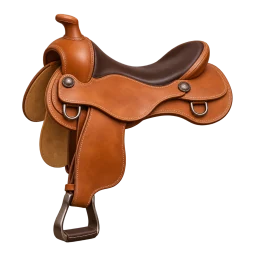
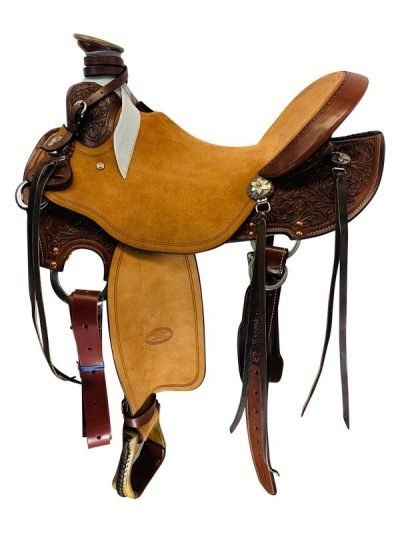
The merchant text describes a smooth-out seat and fenders but also calls the seat padded; the pictured black seat should not be used to resolve its exact covering. The manufacturer also uses smooth-out wording. Get a close photograph and a written surface description for the saddle being offered.
A 2046 is listed with a longer skirt than the spotted 2042: 27½ inches versus 25 inches in the captured tables. Compare those actual designs rather than assuming two Ladies All Around names indicate the same rider space or horse fit.
Pros & Cons Analysis
Pros
- Two buyers describe an easier lift to taller horses, with one preferring it to a heavier-duty saddle. Around 34 lb is the merchant’s approximate figure; compare complete saddles rather than equating the Ladies name with a specific weight.
- A multi-year owner likes being secure without feeling trapped and values freely moving stirrups. Another uses the saddle across several disciplines, while acknowledging that the seat is not ideal for cutting. Versatility is a preference tradeoff, not equal specialization.
- The multi-year account and a long-trek rider provide more context than initial appearance alone. Other buyers also like the construction, including one purchasing for a daughter; this does not establish suitability for all young riders.
Cons
- A barrel rider finds the saddle slippery, while a different owner wants a taller cantle. The barrel rider hopes use will improve the feel but does not report that it did. Do not budget on an unverified break-in cure.
- One owner says the fender is barely covered by the jockey at the required longer setting. Verify the usable reach on the exact size before assuming a larger seat resolves the leg-length question.
- A buyer likes the reduced bulk but finds the leather thinner than on a heavier-duty saddle and doubts its suitability for hard work. That is an owner comparison, not a manufacturer prohibition or a measured material-strength result.
Choose how much movement you want from the 2046
Your next ride
Use your preferred riding position as the deciding factor.
Do not assume a slippery feeling will disappear with use.
Movement or more hold?
Use these as reminders during your trial or seller conversation.
- Try the seat through the positions your riding requires.
- Check fender overlap at your own leg length.
- Confirm the offered seat covering and padding.
How this changes the recommendation
The 2046 is most compelling for riders who appreciate easy movement and manageable handling across varied rides. It is less convincing when the priority is a tightly held barrel position or an assumption of heavy-working construction. Test the surface, cantle feel and long-leg setting together; the right amount of freedom is personal.
Frequently Asked Questions
Will the 2046 feel as secure as a barrel-specific seat?
One owner finds it slippery for barrels while another likes its freedom of movement. Try the position and surface for your own riding; the hoped-for break-in improvement is not verified.
Can a larger seat solve the long-leg adjustment issue?
Not automatically. The relevant account concerns fender overlap at the needed length. Measure usable adjustment on the exact seat and fender combination.
Technical Specifications
| Model / scope | Billy Cook All Around 2046 Merchant |
|---|---|
| Intended use | Reined cow horse, cutting and reining described by maker Manufacturer |
| Seat sizes | Conflict: merchant table 14½ in; selector 14–16 in; maker 14–17 in Merchant; Manufacturer |
| Seat construction | Conflict: wording says smooth-out and padded; confirm offered covering Merchant |
| Cantle height | 4 in; rawhide, tooled overlay and silver lacing Merchant |
| Tree construction | Rawhide-covered All Around Merchant |
| Tree / bar options | QH bars Merchant |
| Published gullet width | 7 in listed; measuring method unspecified Merchant |
| Main materials | Basket-stamped leather; smooth fenders; artificial wool lining Merchant |
| Rigging | Stainless steel dees front and rear Merchant |
| Skirt length | 27½ in Merchant |
| Skirt drop | Not verified in captured exact-model documentation |
| Swell width | 13 in Merchant |
| Horn dimensions / type | 2½ in short post with cap Merchant |
| Published saddle weight | Approximately 34 lb Merchant |
| Hardware | Stainless rigging Merchant |
| Included equipment | 2-in bell rawhide stirrups; front cinch excluded Merchant |
| Work subtype | All-around Merchant |
| Manufacturer-stated roping use | Not verified in captured exact-model documentation |
| Horn construction | Not verified in captured exact-model documentation |
| Fender adjustment range | Not verified in captured exact-model documentation |



ALL CATEGORIES
Find your riding style.
Explore saddle categories for the way you and your horse ride.