THE SADDLE FILES / MODEL REVIEW
Dakota 213 review: a secure seat with leg-contact compromises
The Dakota 213 appeals to riders who want a secure trail seat and places to attach equipment. Its owner record also raises practical questions about hard cushioning, bulk beneath the leg and the consistency of leather finishing.
In the saddle: at a glance
RIDER PRIORITIES / EQUIPMENT / OWNER EVIDENCE
KEY FEATURES
- 25-inch barrel-style skirt
- 5-inch cantle and 13-inch swell
- 7/8 front in-skirt and rear overlay rigging
- Approximately 30 lb; full flank set listed
YOUR RIDING PRIORITIES
- Consider it for
- Trail rider evaluating Dakota 213
- The tradeoff
- Firm padding, rigging bulk or unsuitable stirrup position can outweigh a successful horse fit.
- Before committing
- Historical offers and personal riding outcomes require exact-saddle confirmation.
PROS
- A secure riding position has specific support.
- Trail attachments and custom options can be useful.
CONS
- Some riders find the seat too hard.
- Bulk and adjustment hardware can affect leg contact.
- Finish and assembly deserve close inspection.
- The equipment package may need preference changes.
Trail-saddle assessment
Research judgments · 5-point scale · Horse fit is not scored
Secure position and comfort praise coexist with substantial firm-seat reports.
Some easier-lift accounts, but reach and under-leg bulk need checking.
Finish praise conflicts with specific historical complaints.
Attachment points are useful; stirrup preferences differ.
How to read these bars
Research judgments from attributed owner accounts; horse fit and medical outcomes are not scored.
1: serious shortcomings; 2: drawbacks outweigh benefits; 3: mixed experience or setup tradeoffs; 4: repeated positives with caveats; 5: strong consistent evidence without a material unresolved limitation. Not rated means evidence is insufficient. These scores are not averaged into an overall star rating.
Read the original owner accountsSecurity and softness are different outcomes
One owner credited the deep seat with a secure feeling on a young horse, but found the cushioning too hard on an 11-mile ride. Another praised construction while describing dense, hard seat foam. A seat can feel reassuring and still be uncomfortable for the time you plan to spend in it.
| Account | Useful observation | Limit |
|---|---|---|
| Regular-tree purchase | Secure deep seat | Hard cushioning and bulk beneath the leg |
| Custom short-fender purchase | Happy with added padding and reach | Not a standard-stock configuration |
| Lessons and trails | Centered position and comfortable riding | Personal experience, not a guarantee |
Look below the seat before accepting the fit
The detailed regular-tree account describes thick rigging beneath the leg and a rear-cinch position that interfered with heel contact. Another shorter-legged rider reported the Blevins hardware rubbing beneath the fender. These are reasons to assess the complete leg path and adjustment range, not instructions to modify the rigging yourself.
A buyer who liked the trail strings and D-rings nevertheless changed the stirrups and disliked the fender backing. The saddle’s equipment is part of the choice: try the opening with your boots and ask which changes the seller supports.
Inspect this build rather than an older Dakota reputation
Many owner accounts praise leather and workmanship. Two contrary accounts identify poor fleece, irregular stitching, unfinished edges or uneven color. Those complaints do not establish a defect rate, but they make arrival inspection material to the decision.
Custom trees also matter. One buyer explicitly chose an extra-wide wood tree instead of a flex tree. The current listing says Equi-Fit Regular or FQHB; historical “flex” wording is insufficient to identify your saddle. The 2212 offers a lower listed cantle and longer skirt if you want to compare a different Dakota position.
Keep or query on arrival
- Compare tree and seat details with the order.
- Inspect fleece, edges, stitching and fastenings.
- Check heel clearance and the full fender adjustment.
- Resolve suspected hardware problems before riding.
Pros & Cons Analysis
Pros
- Owners describe staying centered in lessons and feeling supported during unexpected movement. That is useful seat-position evidence, although security should not be confused with fall prevention.
- An owner appreciated multiple equipment attachment points; others obtained shortened fenders and additional padding. Confirm compatible equipment and current custom-order conditions.
Cons
- Two otherwise favorable accounts identify firm cushioning, including discomfort on a longer outing. Test the actual seat before relying on favorable reports from differently padded builds.
- The rear-cinch position and thick rigging troubled one rider; another reported buckle rubbing at a short adjustment. Check your leg path in the complete setup.
- Complaints about fleece, stitching and unfinished or mismatched leather conflict with substantial quality praise. Inspect the delivered example without treating anecdotes as a production failure rate.
- Owners have replaced stirrups, while one disliked the fender backing and handling weight. Replacement suitability and cost belong in the purchase decision.
Does the 213’s deeper position work for you?
Security without unwanted bulk
Try the 213 when seated security and trail attachment points matter more than a minimal saddle.
Firm padding, rigging bulk or unsuitable stirrup position can outweigh a successful horse fit.
Sit in the 213 before settling its options
Use these as reminders during your trial or seller conversation.
- Try the cushioning without assuming it will soften.
- Check heel contact, buckle position and stirrup opening.
- Inspect the fleece, stitching and ordered construction.
The tradeoff behind Dakota 213
The 213 is most convincing as a secure, equipped trail candidate whose actual seat and leg space you can try. Its shorter outer skirt is useful to compare, but cannot certify horse fit. Pass on an example with unresolved hardware or finish concerns, and reconsider the model if the deep seat is firm or the rigging intrudes on your leg. A custom success story is a lead for discussion, not proof that the stock saddle solves the same problem.
Frequently Asked Questions
Is the Dakota 213 necessarily a flex-tree saddle?
The current captured listing identifies an Equi-Fit tree, while historical owners describe different and custom constructions. Obtain the exact tree designation for your offer.
Is a 25-inch skirt enough to establish short-back fit?
No. Skirt length describes the outer saddle, not the complete shape and bearing area of the tree.
Technical Specifications
| Model / scope | Dakota 213 Merchant |
|---|---|
| Intended use | Western trail Merchant |
| Seat sizes | 15, 16, 17 in; 13 or 14 by inquiry Merchant |
| Seat construction | Black grainout; confirm padding Merchant |
| Cantle height | 5 in Merchant |
| Tree construction | Trail Equi-Fit; historical custom trees differ Merchant |
| Tree / bar options | Regular or FQHB Merchant |
| Published gullet width | Not documented in the captured specification |
| Main materials | Pro Brown leather; easy-twist fenders Merchant |
| Rigging | 7/8 single in-skirt front; overlay rear Merchant |
| Skirt length | 25 in Merchant |
| Skirt drop | Not documented in the captured specification |
| Swell width | 13 in Merchant |
| Horn dimensions / type | 3.5 in leather horn; cap unspecified Merchant |
| Published saddle weight | Approx. 30 lb Merchant |
| Hardware | Confirm exact supplied hardware |
| Included equipment | Full flank set with connector strap Merchant |
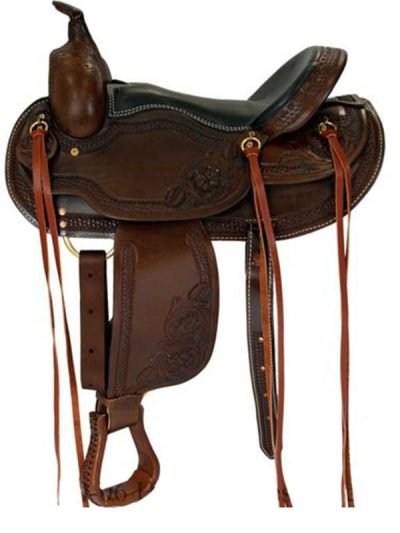


Dakota Walking Horse 750
a substantial leather gaited candidate with equipment to verify

ALL CATEGORIES
Find your riding style.
Explore saddle categories for the way you and your horse ride.